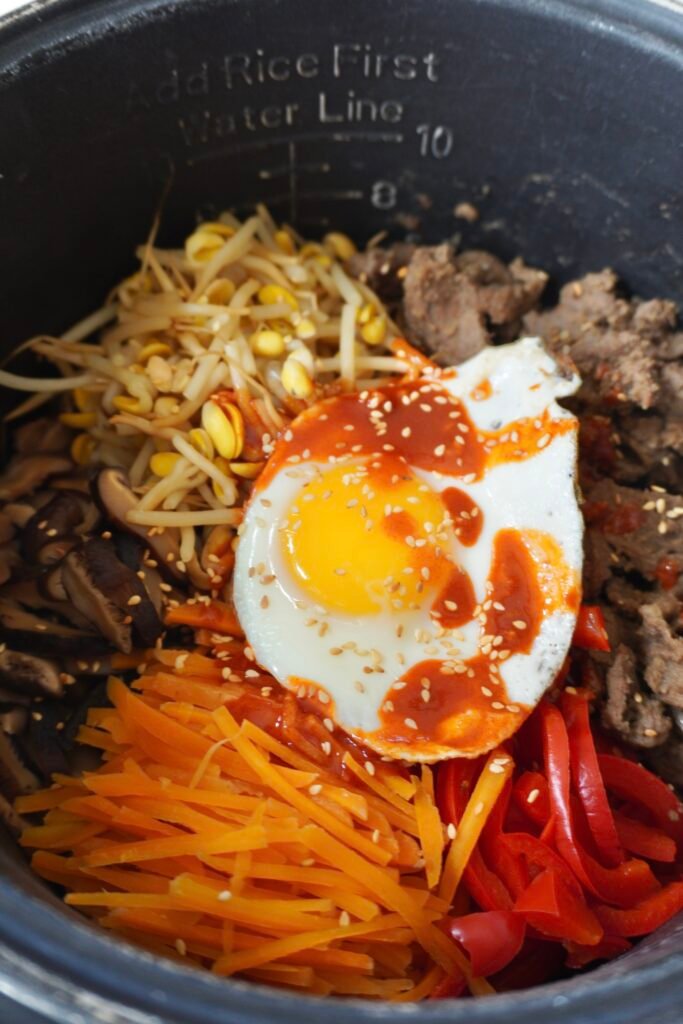
Save time by making this nutritious and satiating Korean dish in the rice cooker!
This rice cooker bibimbap is the only dish you'll have to make lunch or dinner because it's a fully balanced meal, rich in flavor and packed with a variety of vitamins and minerals.
Bibimbap is a Korean mixed rice bowl that typically includes protein and a variety of vegetables, often served in a hot stone pot called a dolsot. The dish is brought together with a spicy, tangy sauce made from chili paste, vinegar, and other seasonings. It is one of my favorite dishes to make or order at restaurants because it provides a balanced combination of macronutrients - protein, carbohydrates, and fats - while also featuring a colorful assortment of vegetables. Traditionally, each component of the dish is cooked separately, which can be time-consuming. To simplify the process and reduce the number of dishes I have to wash, I often add the ingredients directly into a rice cooker and let them cook together. The result is still a delicious bibimbap and the perfect “dump-and-go” meal for days when you don’t want to spend too much time cooking.
Bibimbap is one of the most common dishes served at Korean restaurants and was one of the first Korean dishes I ate when I was introduced to Korean cuisine as a child. Each restaurant uses its own selection of vegetables, though carrots, bean sprouts, and mushrooms are almost always included. I like how customizable the dish is because it can easily serve an entire group of people and also works well as a “fridge cleanout” recipe. Have some broccoli, squash, and bell peppers left in the fridge? No worries - just throw them in the rice cooker!
Not all rice cookers are created equally
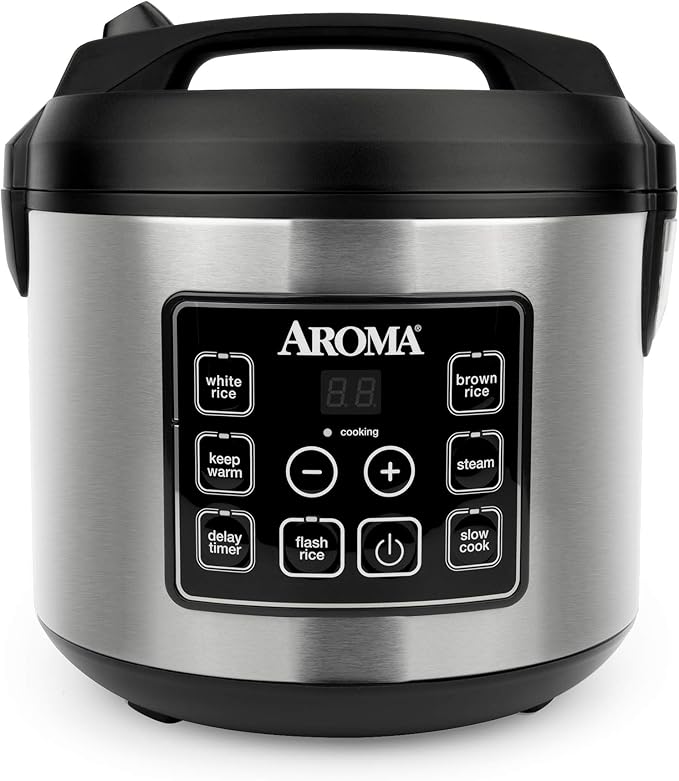
One key thing to note about this recipe is that not all rice cookers are created equally. Some cookers are better at circulating heat evenly than others. How a rice cooker times when the rice is done cooking simply depends on its sensor technology. Therefore, it is important to keep in mind that if certain ingredients appear undercooked when the rice cycle is up, you can simply use your judgment and add additional time if needed. The rice cooker I used for this is not fancy or expensive by any means.
Marinated beef and nutritious vegetables are cooked together with rice entirely in a rice cooker. The dish is then tied together with a savory, tangy chili paste sauce.
For Meat
3tablespoons soy sauce
1 1/2tablespoon brown sugar
1tablespoon mirin
1/2medium apple (peeled)
1garlic clove
1small knob ginger (equivalent to 1/4 teaspoon grated ginger)
1/4medium onion
300grams thinly sliced rib eye or sirloin steak
1/2teaspoon baking soda
For Rice and Vegetables
1 1/2cup short grain rice
1 1/4cup water
1 bell pepper (thinly sliced)
1 1/2cup bean sprouts
8 shiitake mushrooms (sliced)
1 1/2cup shredded carrots
pan fried egg to top (optional)
For Sauce
1/4cup gochujang (Korean chili paste)
2teaspoons rice vinegar
2teaspoons water
2teaspoons light brown sugar
1teaspoon sesame oil
1small garlic clove (minced)
Instructions
1
In a blender, add soy sauce, brown sugar, mirin, apple, garlic, ginger, and onion. Blend until a smooth sauce forms.
2
Add the marinade, beef, and baking soda together in a medium-sized bowl. Cover the bowl and marinade for at least 30 minutes.
3
Wash and drain the rice two times. Add the rice back into the rice cooker and add 1 1/4 cup water.
4
On top of the rice, add bell pepper, bean sprouts, mushrooms, carrots, egg, and the marinated beef.
5
Cook this on the 'white rice' setting.
6
After the rice cooker is done, check the ingredients (primarily the rice and beef) and check if they are cooked completely. If the rice looks underdone and the beef still looks raw, cook for another 'white rice' cycle.
If the meat and rice are not entirely cooked after cycle one, depending on the type of rice cooker you use, you may choose to cook more using 'steam', 'white rice', or customized time functions.
7
To make the sauce, whisk all of the sauce ingredients together.
8
Once the bibimbap is cooked, serve it with the sauce and enjoy!
Nutrition Facts
Servings 4
Serving Size 1
Amount Per Serving
Calories420kcal
% Daily Value *
Total Fat7.4g12%
Sodium718mg30%
Total Carbohydrate60.1g21%
Dietary Fiber5.3g22%
Sugars13.3g
Protein29g58%
* Percent Daily Values are based on a 2,000 calorie diet. Your daily value may be higher or lower depending on your calorie needs.
Note
Nutrition Facts excludes the sauce.
Cooking times can differ, depending on the brand of rice cooker you use.
For vegan, use tofu or any meat alternative.
This dish can be stored in the fridge in an airtight container for up to 5 days.
Keywords:
bibimbap, rice cooker bibimbap, Korean food
Did you make this recipe?
Tried this recipe out? Tag @eatswithjamie on Instagram so we can see your recipes!