This post may contain affiliate links.
These braided black sesame milk rolls are bakery-quality and fills your kitchen with a sweet, comforting aroma as it bakes. Homemade bread is truly worth every bite, especially since you can customize it exactly to your liking. Bread-making is an art that requires patience and practice, but once you get the hang of it, it’s surprisingly foolproof.
These rolls feature a buttery, milky dough similar to challah, though it uses fewer eggs. Soft, tender, and lightly sweet, it’s the kind of bread you’d typically find in Chinese, Japanese, or Korean bakeries – perfect on its own or paired with your favorite spreads.
I began practicing bread-making approximately 8 years ago and failed several times in the beginning because I didn’t fully understand the science behind it. Through trial and error, I learned that small details make a huge difference. Below are a few crucial tips for making successful milk bread:
- Use lukewarm liquid (~105°F):I often used water that was too hot, which killed the yeast and resulted in dense, flat bread. Room-temperature water works as well, but warm water helps activate the yeast more efficiently.
- Always add sugar with yeast: Sugar feeds the yeast and helps it activate properly.
- Proof the dough at the right temperature: Room temperature (~ 80–85°F) works well, or you can place the dough in a slightly warmed oven (~80°F). I used to kill my yeast by putting it in an oven that was too hot. Avoid that mistake!
- Do NOT add excess flour when the dough feels wet: This was one of my biggest mistakes. Milk bread dough starts out sticky and needs time to develop gluten. Keep kneading, and only add flour very gradually – about ½ teaspoon at a time – until the dough becomes smooth. If the recipe is followed correctly, very little extra flour is needed. Trust me on this.
- Kneading is essential: Hand-kneading can take up to 30 minutes. The dough should bounce back when pressed, feel springy, and pass the windowpane test. If it doesn’t, the bread will not be fluffy. This step is non-negotiable. Using an electric mixer can save a lot of time.
- Patience is key: Most of my failures came from rushing the process – cutting rising time short, not waiting for the yeast to activate, or stopping kneading too early.
- Do not over-rise the dough: For milk bread, the first rise should be no more than 1½ hours. Over-proofing leads to tough bread with large air pockets instead of a soft, fluffy crumb.
I recommend using an electric dough mixer to save time, but if kneading by hand, expect the process to take about three times longer. This is a large-batch recipe that yields 8 large or 10 medium rolls. If needed, you can easily halve the recipe to make 4 large or 5 medium rolls. The bread freezes very well, making it perfect for batch baking and enjoying later.
Do I need special equipment to make this bread?
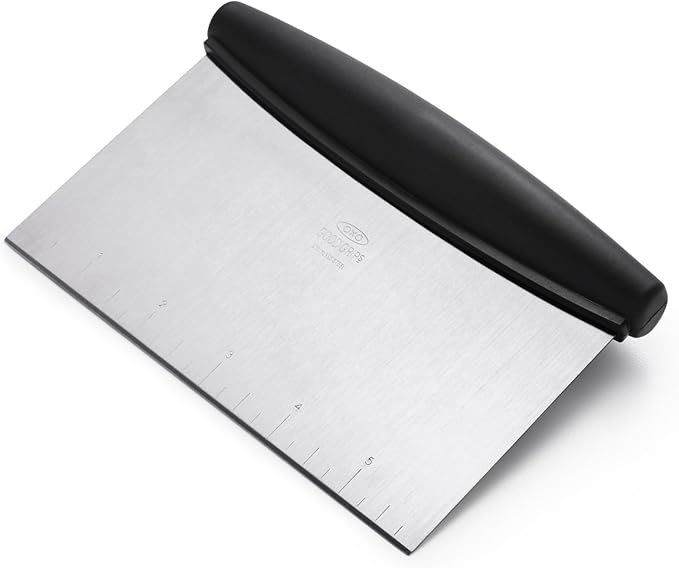
I highly recommend using the following tools to produce beautiful and tasty rolls and to make the process easier:


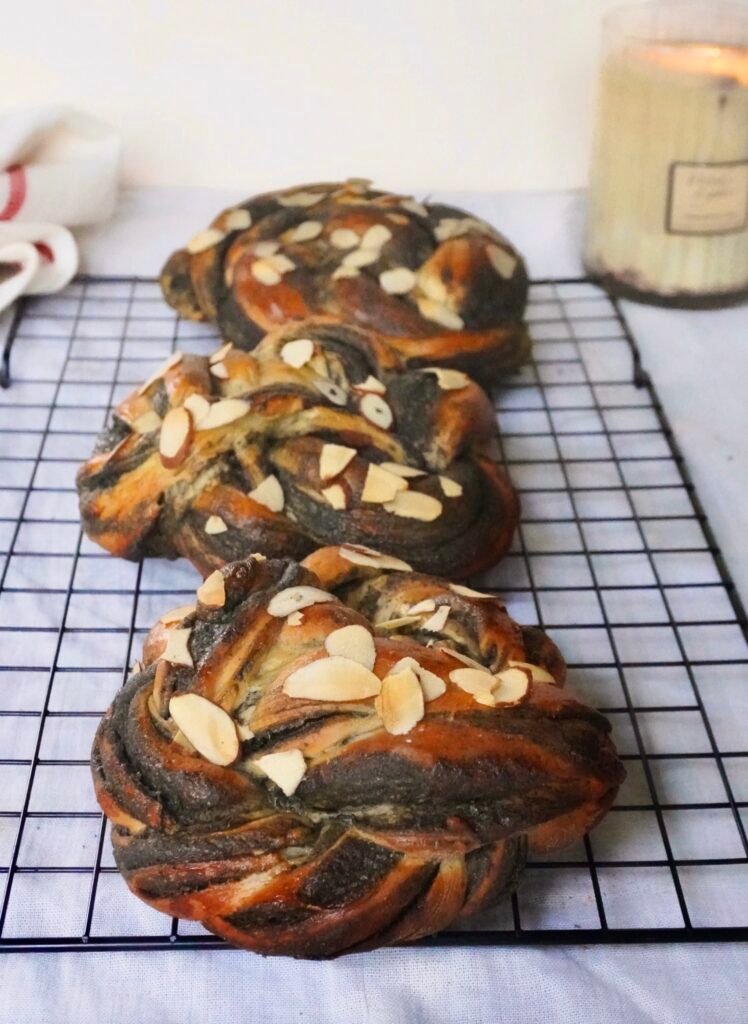

Braided Sesame Milk Rolls
Description
Turn your kitchen into an Asian bakery with these aromatic and nutty black sesame rolls.
Ingredients
For Dough
For Sesame Paste
Instructions
-
In a stand mixer, add sugar, milk, and yeast. Give it a stir and let the mixture sit for 5 minutes.
-
The mixture should appear bubbly, which indicates the yeast is active. Add flour, salt, eggs, butter, and ilk. Knead the dough on low speed for 10-12 minutes with a dough attachment.
-
Transfer the dough to a floured surface and shape the dough into a ball. Place in a large oiled bowl or container and set aside in a warm (~80 °F) area and allow the dough to double in size for 1 hour - 1 hour 15 minutes, if needed.
-
In the meantime, add black sesame seeds into a food processor and process on high until it's completely ground.
-
Add sugar and butter and pulse for 30 seconds or until the mixture is fully incorporated. Set aside.
-
After the dough has doubled in size, punch it down to release air and transfer it to a floured surface.
-
Shape the dough and portion it into 8-10 equal pieces using a pastry scraper or knife.
-
Watch Video on How to Shape
To form the bread, take one piece of dough and use a rolling pin to roll it into a large rectangle. -
Spread about 1 1/2 tablespoon of sesame paste on the dough. Do not spread too much on the upper part of the dough. Starting from the bottom, roll up the dough tightly and seal the edges.
-
With the cylindrical dough, use your hands to roll it into a longer dough that measures ~10 inches.
-
Using a pastry scraper or knife, cut the dough directly in half (long way) while leaving about 1/2 inch of uncut dough on top. Make sure the sesame-paste inside is facing upwards. Tightly twist the dough together and seal the dough at the bottom.
-
Loop the right dough over the left and loop the left dough over the right into the middle and loop the right dough under the left to form a knot.
-
Repeat for the rest of the dough and place the knot onto a non-stick baking sheet or a baking sheet lined with parchment paper.
-
Cover the rolls with a clean cloth or a piece of foil and and allow the dough to rise for 25 minutes for a second time in a warm area. In the meantime, preheat the oven to 340 °F.
-
Brush the rolls with egg wash.
-
Bake the rolls for 20 minutes at 340 °F on the middle rack.
-
Remove the rolls from the oven and allow to cool for at least 5 minutes before eating.

Nutrition Facts
Servings 8
Serving Size 1
- Amount Per Serving
- Calories 565kcal
- % Daily Value *
- Total Fat 19.5g30%
- Sodium 112.7mg5%
- Total Carbohydrate 80g27%
- Dietary Fiber 2.9g12%
- Sugars 20.6g
- Protein 16.5g33%
* Percent Daily Values are based on a 2,000 calorie diet. Your daily value may be higher or lower depending on your calorie needs.
Note
The bread can be stored in the fridge up to 4 days for freshness or can be stored in the freezer up to 1 month.
To reheat the bread, microwave on high for 10-15 seconds.