This post may contain affiliate links.
A nutritious, high-protein meal that is full of flavors!
Calling all sushi and poke lovers; this dish is for you. Seared ahi tuna served over rice with fresh vegetables and fruit is a protein-packed, gluten-free meal* that’s both satisfying and vibrant. A homemade ponzu (Japanese citrus sauce) is drizzled on top to tie all the flavors together beautifully.
I’ve always loved sashimi growing up, but sushi, poke, or any raw fish dish can be pretty expensive when dining out. While high-quality fish isn’t cheap, you get far more bang for your buck when you prepare these dishes at home. I recently bought a wholesale pack of ahi tuna steaks and have been enjoying them in a variety of ways, so you can definitely expect more tuna recipes coming soon. For this one, I kept things simple with a rare, lightly seared tuna steak. Tuna is best enjoyed raw or semi-raw, as fully cooked tuna tends to be dry due to its low fat content. A well-done tuna steak is basically canned tuna, and that’s not the goal here.
Tuna is a low-calorie, high-protein fish rich in B vitamins and potassium. I paired it with carrots, edamame, pineapple, cucumber, and avocado for both color and nutrient variety. More color means a wider range of vitamins and minerals. These ingredients are mostly low in fat and incredibly satisfying.
How to purchase safe tuna?
Consuming raw fish always carries some risk, and high-risk individuals should avoid it. Be cautious about the source of your tuna and make sure you purchase sashimi-grade fish. “Sashimi-grade” is an unofficial term, meaning the seller claims the fish is safe for raw consumption based on FDA guidelines. The fish should be frozen for a specific period immediately after it is caught to kill any parasites. Wild fish are more likely to have parasites than farmed fish. The best tip for purchasing fish intended for raw consumption is to buy from a reliable source and read reviews. I did extensive research on my supplier before purchasing the tuna.
How to prepare ahi tuna at home: If the tuna steak arrives frozen, thaw the fish without packaging in an airtight ice water bath in the fridge. Sanitize cutting boards and knives with boiled water.
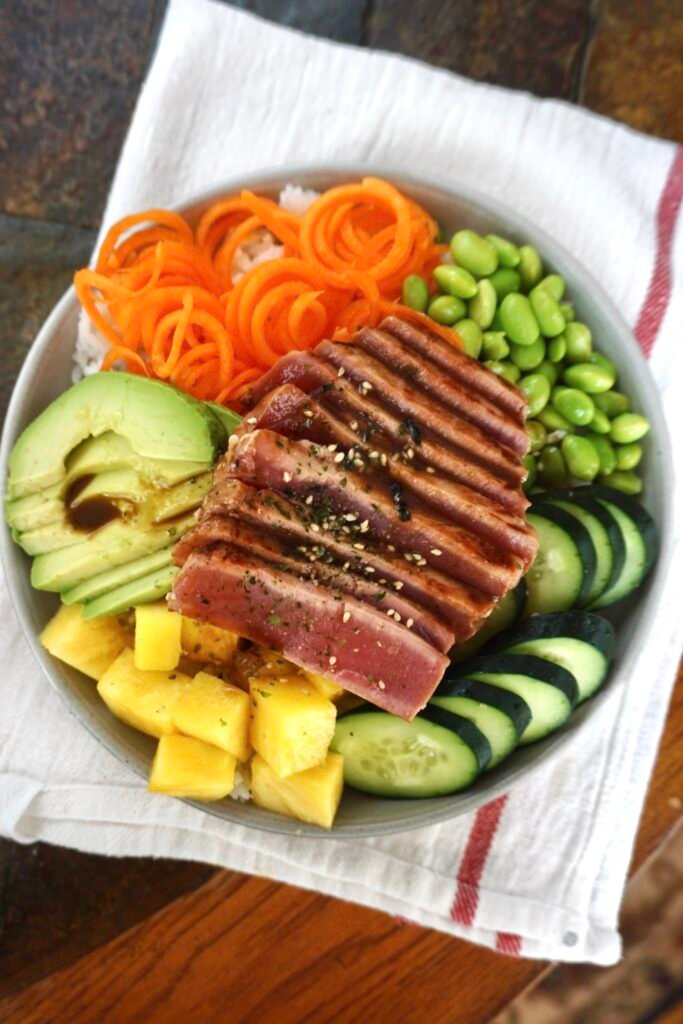

Seared Ahi Tuna Bowl
Description
This citrus-flavored seared tuna with fresh and vibrant vegetables is packed with nutrients and leaves you feeling refreshed.
Ingredients
For Rice
For Tuna and Toppings
For Sauce
Instructions
-
Wash the short grain rice three times, draining it in between.
-
Add the drained rice and water in a rice cooker or pot. Soak the rice for 15 minutes.
-
Bring the pot of rice to a boil over medium heat and turn the heat down to low. Cover the pot and simmer for 15 minutes. Turn off the heat and keep the lid on for an additional 8 minutes.Alternatively, cook according to your rice cooker settings.
-
Fluff the rice and transfer to a large bowl and allow to cool for at least 10 minutes. Add in the remaining sushi rice ingredients and mix together until all ingredients are incorporated. Set aside.
-
Pat the thawed tuna steak dry with a paper towel and season both sides with salt.See introduction on how to thaw tuna safely.
-
Heat a cast iron skillet over high heat. Sear each side of the steak for 1 minute. Remove and rest for 2 minutes. Thinly slice the steak and set aside.
-
Add the rice to a large bowl or plate and add the carrots, edamame, pineapple, cucumber, avocado, and tuna on top. Top with furikake.
-
In a small bowl, mix the sauce ingredients. Drizzle it over the bowl and enjoy!
Nutrition Facts
Servings 2
Serving Size 1
- Amount Per Serving
- Calories 624kcal
- % Daily Value *
- Total Fat 10.6g17%
- Sodium 1094mg46%
- Total Carbohydrate 96.7g33%
- Dietary Fiber 7g29%
- Sugars 10.6g
- Protein 34.4g69%
* Percent Daily Values are based on a 2,000 calorie diet. Your daily value may be higher or lower depending on your calorie needs.
Note
Tuna should be consumed immediately after eating. If you have leftovers, refrigerate for up to 24 hours.
*To make this recipe gluten-free, use tamari.